A National Rail-Linked Housing Growth Strategy
Updated: Sep 14
Delivering 1.2 Million Homes Through Station-Centred Development
Prepared by: Taxpayers Against Poverty as part of series of policy briefs submitted to government and selected MPs
Date: July 2026
Executive Summary
Britain faces a chronic housing shortage, rising housing costs, growing regional inequality, and increasing pressure on infrastructure and transport systems.
At the same time, vast areas of underutilised land exist within walking distance of railway stations outside major cities — locations that are inherently sustainable, connected, and economically productive.
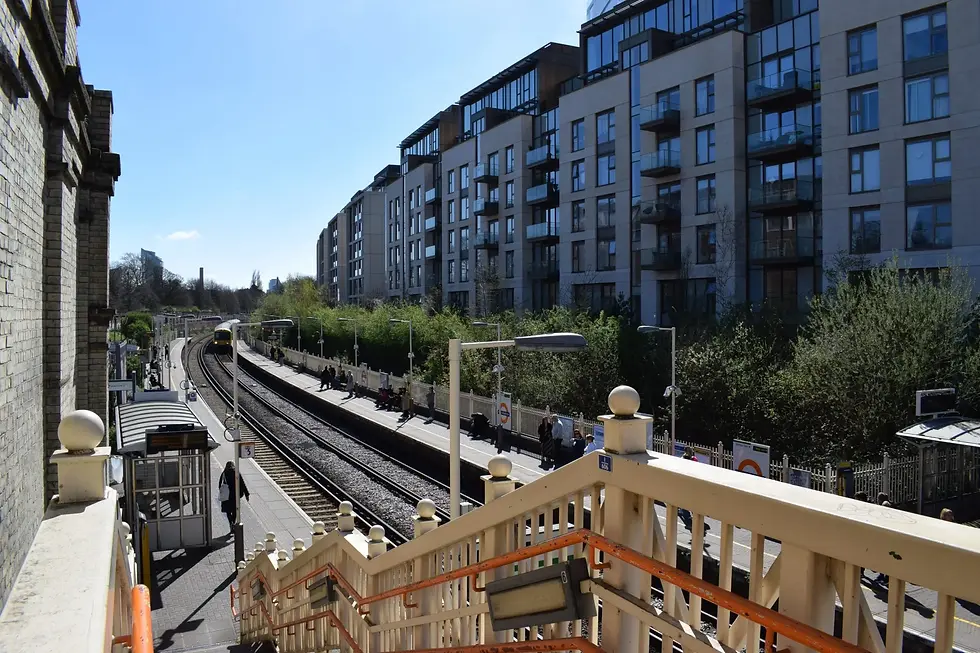
This paper proposes a bold national strategy to deliver up to 1.2 million new homes through a coordinated programme of rail-linked development focused on land within approximately 800 metres (10 minutes’ walk) of railway stations outside major urban centres.
The proposal would combine:
· strategic land assembly by local authorities,
· transport-oriented development,
· infrastructure-led regeneration,
· public land value capture,
· and long-term community planning.
Rather than uncontrolled sprawl, the strategy would create compact, walkable, mixed-income communities linked directly to employment and public transport.
The objective is not simply to build more housing.It is to:
· reduce housing costs,
· improve regional growth,
· strengthen local economies,
· reduce car dependency,
· support public transport viability,
· and create more balanced national prosperity.
1. The National Challenge
Britain’s housing crisis is now directly impacting:
· economic productivity,
· family formation,
· labour mobility,
· public health,
· poverty levels,
· and intergenerational fairness.
Key pressures include:
· unaffordable housing costs,
· insufficient social and affordable housing,
· weak regional investment,
· declining town centres,
· infrastructure imbalance,
· and excessive concentration of growth in a small number of major cities.
Meanwhile, many towns with existing railway infrastructure remain significantly underdeveloped.
This represents a major missed opportunity.
2. The Core Proposal
A National Station Growth Programme
The government would establish a long-term national programme to support development around railway stations outside major cities.
Core Target
Deliver up to 1.2 million homes over 10–15 years through development within walking distance of qualifying railway stations.
Geographic Focus
· Existing railway stations outside major metropolitan cores
· Small towns
· Market towns
· commuter settlements
· secondary urban centres
· underutilised rail corridors
Development Radius
Primary focus:
· land within approximately 800 metres of stations
· equivalent to around a 10-minute walk
This aligns with emerging planning analysis around sustainable station-led development. (Lichfields)
3. Why Railway Station Development Makes Sense
Economic Benefits
Rail-linked housing:
· improves labour mobility,
· supports regional productivity,
· increases access to employment,
· and strengthens local high streets and services.
Research cited in planning analysis suggests rail-station growth could unlock housing at significant scale in economically productive regions. (Lichfields)
Environmental Benefits
Station-centred communities:
· reduce car dependency,
· reduce congestion,
· lower emissions,
· and support public transport viability.
This represents a more sustainable alternative to low-density sprawl.
Social Benefits
Done properly, rail-linked growth can:
· create mixed-income communities,
· improve access to affordable housing,
· support younger families,
· and regenerate struggling towns.
4. Local Authority Land Acquisition Model
Strategic Public Land Assembly
Local authorities would be empowered to:
· identify suitable land around stations,
· acquire land through negotiated purchase or existing compulsory purchase mechanisms,
· masterplan development zones,
· and retain long-term strategic control.
Why Public Land Assembly Matters
Currently, large increases in land value generated by planning permission are overwhelmingly captured privately.
Under this model:
· local authorities retain greater control,
· infrastructure can be planned coherently,
· speculative land banking is reduced,
· and a greater proportion of uplift can fund:
o transport,
o schools,
o GP surgeries,
o parks,
o and affordable housing.
This follows successful international models of transport-led development.
5. The Housing Model
Mixed Tenure Communities
Development should include:
· affordable housing,
· social housing,
· market housing,
· rental housing,
· later-life housing,
· and key worker housing.
Density Principles
Typical density:
· 40–70 dwellings per hectare depending on local character and transport capacity.
This is consistent with emerging National Planning Policy Framework (NPPF)thinking around higher density near stations. (Lichfields)
Design Principles
Development should prioritise:
· walkability,
· green space,
· local services,
· cycling,
· community facilities,
· and strong architectural standards.
The aim should be beautiful, sustainable communities rather than high-density dormitory estates.
6. Infrastructure and Transport Integration
Rail Capacity
Development should be tied to:
· increased service frequency,
· station upgrades,
· integrated bus links,
· and active travel infrastructure.
One major advantage of this strategy is that additional population density helps improve rail viability and passenger demand.
Planning analysis suggests many lower-frequency stations currently suffer from a “frequency trap” where insufficient local population suppresses service improvements. (Lichfields)
New housing growth could help justify:
· improved timetables,
· greater rail investment,
· and stronger local economies.
7. Funding and Delivery Mechanisms
Potential Funding Sources
· Public infrastructure bonds
· UK Infrastructure Bank
· Pension fund investment
· Land value capture
· Joint ventures
· Development corporations
· Strategic housing funds
Delivery Vehicles
Potential structures include:
· Local Development Corporations
· Combined Authorities
· Regional Growth Partnerships
· Public-private joint ventures
· Community land trusts
8. Economic Impact
A national station-led growth programme could:
· increase housing supply substantially,
· reduce housing pressure,
· support economic growth,
· create construction employment,
· strengthen regional towns,
· increase rail usage,
· and stimulate private investment.
Importantly, it would shift Britain toward infrastructure-led strategic planning rather than fragmented speculative development.
9. Political and Strategic Advantages
This policy has the potential to unite:
· economic growth,
· housing delivery,
· environmental sustainability,
· regional regeneration,
· and public transport investment.
It avoids the false choice between:
· protecting communities,
· and building homes.
Instead, it focuses growth in the most logical and sustainable locations.
This could become a defining long-term national infrastructure and housing strategy for Britain.
10. Conclusion
Britain cannot solve its housing crisis through piecemeal development alone.
A more ambitious approach is required.
Railway stations already provide:
· connectivity,
· infrastructure,
· economic access,
· and sustainable transport.
By focusing strategic growth around them, Britain has an opportunity to:
· build up to 1.2 million homes,
· revitalise towns,
· reduce inequality,
· support public transport,
· and create more balanced national growth.
The opportunity now exists to move beyond reactive planning and toward a coherent national vision for housing and infrastructure.
A station-centred development strategy could become one of the most transformative and practical housing policies of the next generation.
Sources and contextual references:
For media enquiries, interviews, or comment: Tom Burgess, CEO, Taxpayers Against PovertyEmail: media@taxpayersagainstpovery.org Website: www.taxpayersagainstpoverty.org.uk
About Taxpayers Against PovertyTaxpayers against Poverty is a UK-based independent advocacy group dedicated to tackling poverty, inequality, and economic injustice TAP seeks to influence national and local policy by promoting practical economic proposals that have a positive effect on reducing poverty and unnecessary financial hardship using a direct approach to decision makers and other influencers.
TAP was founded by the late Rev Paul Nicolson and is led by Tom Burgess, author of From Here to Prosperity, a new political agenda for a sustainable economy and greater social justice, which proposes taxing wealth more and income less. TAP is part of Real Agenda Ltd, a not-for-profit social enterprise bringing together campaigns, research, media and public engagement to tackle poverty, inequality and the barriers preventing people from thriving, this includes Compassion in Politics which seeks to bring more honesty, respect and compassion into political life as well as The Progressive Policy Unit (PPU) which develops practical, evidence-based proposals on poverty prevention, economic fairness, taxation, public services and social wellbeing.

Comments